The best flooring for high-traffic commercial areas includes terrazzo, porcelain tile, luxury vinyl tile (LVT), and commercial carpet tile. Each material is chosen for a different strength, whether that’s terrazzo and porcelain’s resistance to wear and moisture, LVT’s balance of durability and design flexibility, or carpet tile’s easy repairability in day-to-day office use. The right option depends on your industry, budget, and how much traffic the space sees each day.
If you manage a busy commercial space, you need flooring designed for the amount or type of traffic the space receives.
In this article, you’ll find the materials that hold up best under high traffic and heavy daily use, without forcing a trade-off between durability and design. We’ll explain what makes each one durable and which spaces they’re built for, so you can match the right option to your business.
Key Takeaways for High-Traffic Commercial Flooring
Here’s what matters most when you’re choosing flooring built to handle heavy daily use:
- Terrazzo and porcelain tile are among the longest-lasting options for the heaviest foot traffic, making them common choices for convention centers, theme parks, and public venues.
- Luxury vinyl tile (LVT) balances durability and design flexibility. Wear layer thickness, measured in mils, is one useful indicator of traffic tolerance, but surface finish and overall construction quality matter just as much.
- Commercial carpet tile is easier and less disruptive to repair than broadloom carpet, since individual tiles can be replaced without redoing the whole floor. That makes it a practical choice for high-traffic settings, even though durability still varies by product.
- The right choice depends on your industry. A hospital, a retail store, and a convention center each put different kinds of stress on a floor.
Best Commercial Flooring for High Traffic Areas at a Glance
The table below shows how each flooring material compares in durability, maintenance, cost, and common uses.
| Material | Best For | Durability | Maintenance | Rating to Check |
|---|---|---|---|---|
| Terrazzo | Convention centers, airports, high-end lobbies | Very High | Low | No single universal traffic rating; verify sealing and slip resistance |
| Porcelain Tile | Retail, restaurants, entryways | Very High | Low | PEI 4-5 for glazed products; confirm commercial and slip rating |
| Ceramic Tile | Moderate commercial use; verify rating for entryways | Moderate to High | Low | PEI 3+ for glazed products; confirm entryway approval |
| Luxury Vinyl Tile (LVT) | Offices, healthcare, hospitality | High | Low | 28 to 40 mil wear layer |
| Commercial Carpet Tile | Offices, corridors, hospitality | Moderate to High | Moderate | TARR 3.0 (heavy) to 3.5+ (severe, entrances/corridors) |
| Slip-Resistant Sheet Vinyl | Healthcare, commercial kitchens | High | Low | Verify wear layer and slip rating on product spec sheet |
| Rubber Flooring | Gyms, healthcare, athletic facilities | High | Low | No single universal durability rating; look for ASTM standards & Shore A hardness |
| Engineered Wood | Lobbies, offices, multi-family | Moderate | Moderate | No single universal durability rating; look for Janka hardness wear-layer thickness, finish, commercial warranty |
| Commercial-Grade Laminate | Offices, retail, multi-family | Moderate to High | Moderate | AC5 (Heavy); AC6 (Very Heavy) |
What Counts as High Traffic in a Commercial Space
High traffic in a commercial space means flooring that takes constant, heavy daily use, more than a typical home ever sees. Think hundreds or thousands of footsteps a day, plus rolling loads like carts, luggage, and wheelchairs. Convention centers and theme parks push that even higher with nonstop foot and equipment traffic.
The amount of traffic in these places is hard to picture. Hartsfield-Jackson Atlanta International Airport moves more than 100 million passengers a year. Orlando International Airport handled nearly 58 million in 2025, and Magic Kingdom draws about 17.8 million visitors annually. Flooring in spaces like these takes a beating every day. It has to be chosen for nonstop use, not just the busiest hours.
That volume of use is exactly why the flooring choices below matter so much. A material that looks great in a low-traffic showroom can wear out fast once it’s handling this kind of daily demand.
Best Flooring for High-Traffic Commercial Areas
Not every high-traffic problem is the same. A material built to survive constant foot traffic isn’t automatically the right choice for rolling carts, spills, or moisture, so the best fit depends on which kind of wear your space deals with most. Here’s how each material performs under high-traffic conditions.
Terrazzo
Terrazzo is built for heavy use. It combines marble, quartz, or granite chips with a cement or epoxy base, then gets polished into a smooth, hard surface.
Because installers pour it in place, terrazzo has fewer joints than tile. Divider strips separate the sections and help control cracking. With fewer gaps, there are also fewer places for dirt to collect and wear to show.
Sealing still matters, especially with cement-based terrazzo. A proper sealer helps protect the floor from moisture and stains.
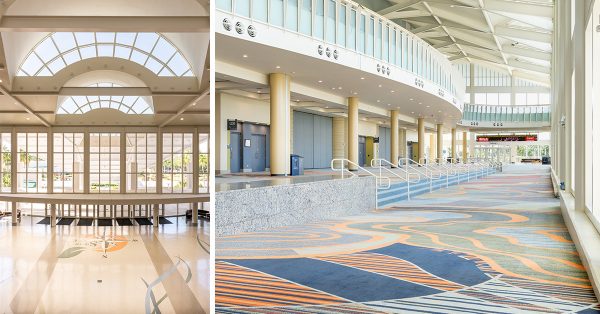
It’s a common choice for convention centers, airports, and high-end lobbies where the floor needs to look sharp for decades, not years. International Flooring installed over 55,000 square feet of custom terrazzo, including 154 terrazzo-clad staircases, during the Orange County Convention Center’s North and South Concourse renovation, all while the venue stayed open and hosted events.
The main drawback is the initial cost. Terrazzo usually makes more sense in large, high-traffic areas than in smaller spaces, where the expense can be harder to justify.
See the full Orange County Convention Center flooring project for more on how that installation came together.
High Traffic Porcelain Tile
Porcelain tile is one of the most reliable choices for high-traffic commercial spaces, valued for its density, low water absorption, and resistance to abrasion. With a water absorption rate under 0.5%, it holds up well in entryways, restaurants, and retail floors that see heavy daily wear and frequent moisture exposure.
Abrasion resistance in glazed porcelain is measured by the PEI (Porcelain Enamel Institute) scale, which runs from 1 to 5. For high-traffic commercial areas, that means looking for PEI 4 for spaces like shops and restaurants, or PEI 5 for the most demanding commercial and industrial use, though PEI only reflects glaze wear, not the tile’s overall commercial suitability, so slip resistance still needs to be checked separately.
Because it resists scratching, staining, and fading so well, porcelain tends to hold its original appearance far longer than softer materials under the same traffic conditions, which is part of why it shows up so often in high-traffic commercial projects.
Luxury Vinyl Tile (LVT)
Luxury vinyl tile is a layered, resilient flooring built to mimic wood, stone, or tile while standing up to daily commercial wear. Wear layer thickness, measured in mils, is one useful signal of how much traffic a product can handle. In general, for high-traffic commercial-grade LVT products start around 28 mils and go up to 40 mils for the heaviest-duty lines, though surface finish and overall construction quality matter just as much as mil thickness alone.
Mohawk Flooring is one of International Flooring’s manufacturer partners and offers commercial LVT as part of its broader flooring lineup. That combination of durability and design flexibility is why LVT shows up so often in offices, healthcare facilities, and hospitality spaces. It holds up well without limiting design options the way some harder materials can.
High Traffic Commercial Carpet Tile
Commercial carpet tile is modular flooring installed in square or plank formats rather than one continuous roll. That construction makes it far easier to repair than broadloom carpet, since a single worn or stained tile can be replaced without touching the rest of the floor. Commercial carpet durability is often measured with the TARR scale, which ranges from 1.0 to 5.0. A 3.0 rating is designed for heavy use and may suit offices, hotels, and similar spaces. Entrances, corridors, and other areas with constant traffic usually need a rating of 3.5 or higher. Mohawk, one of International Flooring’s manufacturer partners, offers commercial carpet tile as part of its broader flooring lineup, giving businesses a range of styles to match their specific space.
In busy corridors and open offices, damaged sections are hard to avoid. Flooring that allows spot repairs can stay presentable much longer, without tearing out and replacing the entire floor.
Slip-Resistant Sheet Vinyl
Standard sheet vinyl can become slippery once it’s exposed to grease, water, or heavy spills, so commercial kitchens and similarly wet, high-traffic areas typically call for slip-resistant sheet vinyl instead. This version uses textured or aggregate surfaces built to improve traction in wet conditions, though proper cleaning and maintenance still play a role in how well it performs over time. Because product naming can describe either wear layer thickness or total product thickness depending on the manufacturer, it’s worth checking the specific spec sheet for wear layer and slip-resistance ratings rather than assuming based on a listed number alone.
Sheet vinyl is installed in large sections, and the seams are heat-welded. That leaves fewer places for water, dirt, or bacteria to collect than a floor made from individual tiles. For that reason, it is common in hospitals, clinics, kitchens, and other spaces where cleanliness and moisture control are daily concerns.
High Traffic Rubber Flooring
Rubber flooring offers good traction and helps reduce noise underfoot. How much cushioning it provides depends on the product and its thickness.
Standard commercial rubber works well in healthcare facilities, hallways, and other busy areas where durability and quieter foot traffic matter. Gyms and sports facilities usually need a thicker athletic-grade product, which is designed to absorb more impact.
It holds up well to heavy foot traffic and rolling loads, and it tends to reduce fatigue for people standing or walking on it for long stretches of the day. Commercial rubber flooring does not use one universal durability rating, so look for relevant ASTM performance standards and Shore A hardness. Shore A, measured under ASTM D2240, indicates the rubber’s resistance to indentation, while other ASTM tests can evaluate abrasion, static loads, and rolling-load performance.
High Traffic Wood Flooring: Engineered Wood
Engineered wood is made from several wood layers topped with a real wood surface. Unlike solid hardwood, it does not rely on a single plank.
Because the core is built in layers, engineered wood reacts less to changes in humidity and temperature than solid hardwood. It is less likely to swell, shrink, or shift as conditions change inside a commercial building.
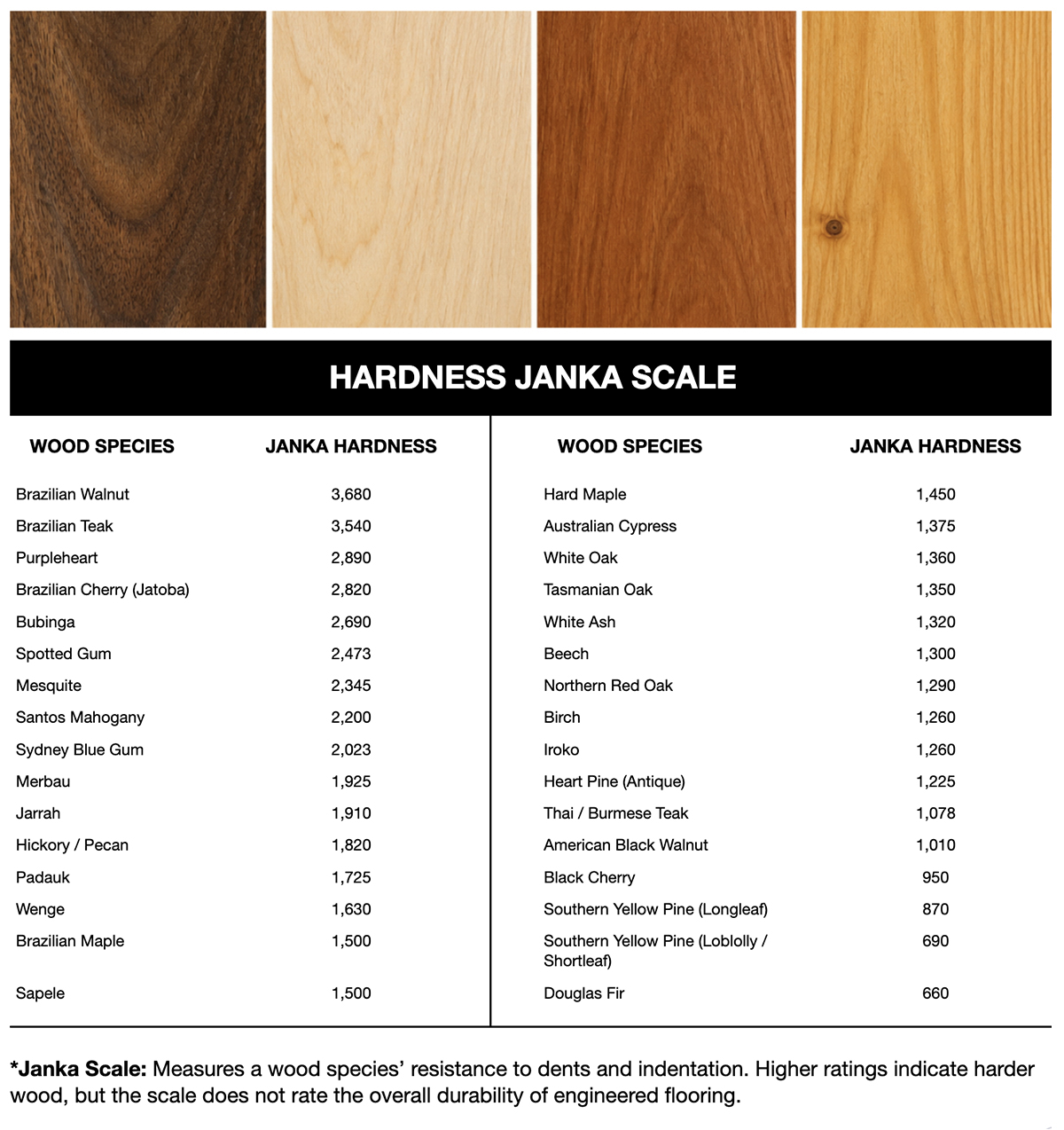
For durability, consider the hardwood species, wear-layer thickness, finish, and commercial warranty. The Janka rating can indicate how resistant the wood species is to dents and indentation, but it does not rate the engineered flooring as a whole. For example, Brazilian Walnut wood is the hardest wth a JANKA rating of 3680, Brazilian Maple wood has a medium JANKA rating of 1500, and Douglas Fir wood has the lowest JANKA rating of 660.
A thicker wear layer provides greater refinishing potential, while factory-applied finishes, including aluminum oxide and UV-cured coatings, can improve resistance to surface wear and scratches.
For high-traffic business areas, choose an engineered wood product specifically backed for commercial use. Commercial warranties can vary significantly by product and may provide different coverage periods for the finish and structural components.
High Traffic Laminate Flooring
Laminate flooring is rated by how well its surface resists wear, using a scale that runs from AC1 up to AC6. Think of it as a scale of how much daily punishment the floor can take: low numbers are fine for a quiet bedroom, higher numbers are built for busy public spaces. AC5 (Heavy Commercial) is designed for high-traffic commercial areas such as department stores, schools, offices, and public buildings. While AC6 (Very Heavy Commercial) is designed for extremely high-traffic commercial environments, such as major retail spaces, busy public buildings, and transportation facilities.
It’s worth checking this rating before choosing laminate for a business, since not every laminate floor is built to handle a commercial environment. The right AC rating depends on how busy the space actually is; an office or boutique needs less than a busy retail floor or public building.
Best Commercial Flooring for High Traffic Areas, by Industry
The materials above perform differently depending on what kind of business is putting them to work. Here’s how they tend to play out across a few common industries.
Hospitality & Entertainment Venues
Hotel and resort floors rarely get a break. Guests, rolling luggage, and housekeeping carts pass through the same areas from morning to night. Near pools, bars, and entrances, water and spills add even more wear.
In a hotel, the floor has to hold up and still look cared for. Guests notice worn walkways, stains, and chipped edges, especially in lobbies and main halls. Terrazzo, porcelain tile, and LVT with a thicker wear layer often perform well in these busy areas.
International Flooring faced these demands while working on Universal Epic Universe, including the Ministry of Magic and Dark Universe areas. The project received a 2026 Eagle Award for the quality of the finished work.
Read more about International Flooring’s Eagle Award-winning work at Universal Epic Universe.
Convention & Public Venues
Convention center floors can go from nearly empty to packed within a few hours. During setup, they also take on forklifts, pallet jacks, display materials, and other heavy equipment.
The size of the space makes every detail easier to spot. A small color difference or uneven seam may disappear in a hallway, but it can stand out across a large exhibit floor. Terrazzo and commercial carpet tile are often chosen because they handle that scale and traffic well.
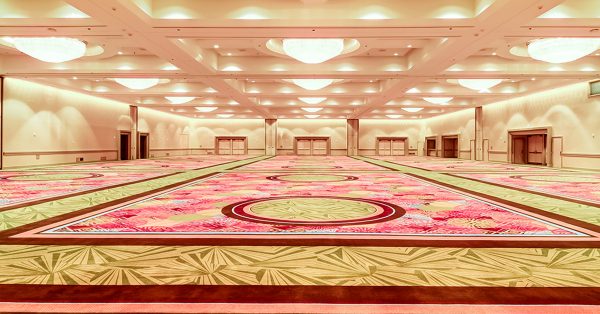
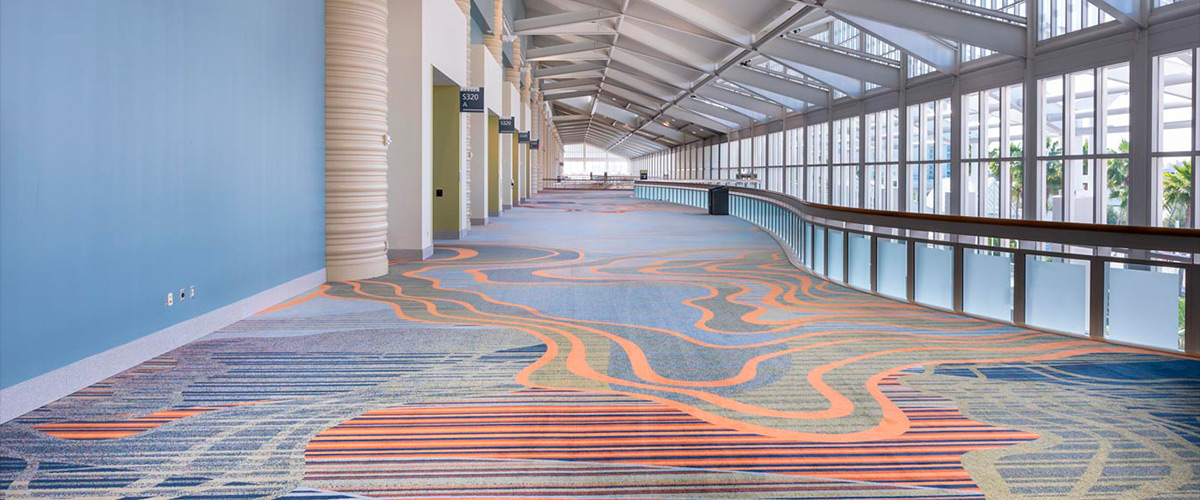
At the Orange County Convention Center, International Flooring installed more than 27,000 square yards of custom carpet and over 55,000 square feet of terrazzo. The work included 154 terrazzo-clad staircases, and the venue remained open throughout the project.
Performing Arts & Public Buildings
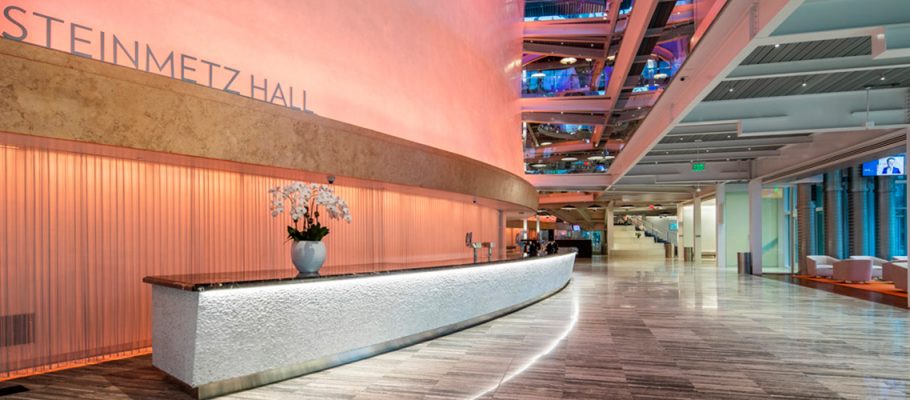
Performing arts centers actually see two very different traffic patterns under one roof. The lobby and public areas take short, intense bursts of foot traffic at arrival, intermission, and exit, while backstage and loading areas deal with heavy equipment traffic year-round, road cases, set pieces, and rigging gear rolling through daily. On top of that, the architect’s design usually drives material choices in the public-facing areas, since these buildings are often designed as landmarks, and floor noise has to be controlled so it doesn’t carry into the auditorium during a performance. International Flooring worked alongside The Whiting-Turner Contracting Company and HKS Architects on the flooring for the Dr. Phillips Center for the Performing Arts, a project that had to meet both the acoustic and design requirements of a public performance venue.
Explore the Dr. Phillips Center for the Performing Arts project.
Healthcare
Healthcare flooring has to handle a lot at once. Beds, wheelchairs, and medical carts move through the same hallways all day, often under heavy loads. At the same time, staff need surfaces they can clean thoroughly and often.
That makes the number of seams and the amount of moisture a floor absorbs especially important. Sheet vinyl and LVT are common in patient rooms and corridors because they hold up well to frequent cleaning and leave fewer places for dirt and bacteria to collect.
Safety is another concern. Spills happen, and many patients may already have trouble walking or keeping their balance. A floor that offers reliable slip resistance can help reduce that risk.
International Flooring addressed these needs at Health Central Park Nursing & Rehabilitation, where durability, cleanliness, and patient safety all played a role in the flooring plan.
Retail
Retail floors take a different kind of wear and tear: constant browsing traffic that moves unpredictably through the space, rather than a predictable path down a hallway. Entryways and checkout or service areas see the heaviest concentrated wear, along with higher spill exposure near food and beverage service. Because the floor is part of the customer’s impression of the space, it also has to stay visually sharp under that wear, not just structurally sound, which is why porcelain tile and LVT with a strong finish tend to outperform materials that scuff or dull quickly. International Flooring’s retail project experience includes Jaleo, a restaurant by Think Food Group at Disney Springs in Orlando, working alongside PCL Construction Services and architect HBC.
Office & Corporate
Office floors usually deal with a more predictable routine. Most wear follows the same paths between desks, meeting rooms, entrances, and shared spaces. Moisture and heavy equipment are less common, so noise control and long-term upkeep often matter more than extreme durability.
That is one reason carpet tile works well in many offices. It helps soften sound in open work areas, and worn or stained tiles can be replaced one at a time. There is no need to tear out the entire floor.
Education
Schools face some of the heaviest cumulative wear of any commercial category: backpacks, cafeteria spills, gym shoes, and constant hallway traffic between classes, usually with a tight maintenance budget and staff who don’t have time for high-maintenance materials. That combination tends to favor durable, low-maintenance options like commercial-grade laminate, LVT, or carpet tile in classrooms, and more moisture-resistant materials like sheet vinyl or rubber in cafeterias, gyms, and labs.
Best Flooring for Specific High-Traffic Areas
Some spaces come with their own traffic demands that go beyond industry alone. Here’s what to look for in a few of the most common high-wear zones.
Best Flooring for a High Traffic Entryway
The best flooring for a high-traffic commercial entryway includes porcelain tile, terrazzo, rubber, and commercial-grade resilient flooring because they resist wear, moisture, and tracked-in grit. A properly sized recessed or surface-mounted entry mat system also helps capture dirt and moisture before they reach the main floor, extending the flooring’s service life.
Best Flooring for a High Traffic Kitchen
For high-traffic commercial kitchens, quarry tile and commercial-grade sheet vinyl are strong choices because they can handle frequent cleaning, spills, grease, and heavy use. The flooring should also provide appropriate slip resistance and be installed with a sanitary cove base where required.
However, in a commercial kitchen, the flooring material is only part of the equation. The way it meets the wall matters too. An integral cove base curves the flooring several inches up the wall instead of ending at a sharp corner. This removes a seam where grease, water, and food debris could build up. It also makes the edges easier to clean, which is why many local health codes require this type of installation in food service areas.
High Traffic Hardwood Floor Finish
For high-traffic hardwood floors, choose a durable factory-applied finish, such as aluminum oxide or UV-cured urethane, with a matte or low-sheen appearance. These finishes help protect against everyday surface wear, while lower sheen levels make dust, scuffs, and small scratches less noticeable than high-gloss finishes.
Why Businesses Trust International Flooring for High-Traffic Commercial Projects
Choosing the right material is only half the equation. Getting it installed correctly, on schedule, and built to last is what determines whether it actually performs the way it’s supposed to.
International Flooring has been in business since 1990, founded by Chris Zimmerman and still run today as a multi-generational, family-owned company based in Central Florida. The company holds NTCA Five-Star Contractor Accreditation, a third-party designation reserved for tile and stone contractors who meet strict standards in craftsmanship and business practices.
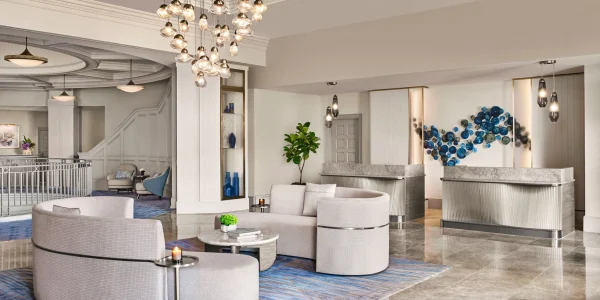
That track record shows up in the range of brands and venues that have trusted IFI with high-traffic flooring, from the Ritz-Carlton Naples, where the team hand-cut intricate stone patterns for a full lobby and guestroom renovation, to the Orange County Convention Center, where more than 55,000 square feet of terrazzo and 27,000 square yards of custom carpet were installed without shutting the venue down. It’s the kind of work that requires precision at a small scale and coordination at a massive one, often at the same time.
Explore International Flooring’s full commercial flooring services.
High Traffic Commercial Flooring FAQs
Here are the answers to the questions we hear most often about flooring for high-traffic commercial spaces.
What is the best commercial flooring for high-traffic areas?
Terrazzo and porcelain tile are generally among the most durable options for high-traffic commercial spaces, thanks to their density and resistance to wear. Luxury vinyl tile and commercial-grade laminate are also strong performers. The right choice depends on your specific traffic level, budget, and whether the space deals with moisture or heavy equipment.
Is LVT or porcelain tile better for a high-traffic commercial space?
Both hold up well, but they solve different problems. Porcelain tile generally offers strong abrasion resistance, though this varies by the specific product’s rating, while LVT is typically more budget-friendly, faster to install, and offers more design flexibility. For most offices, healthcare facilities, and hospitality spaces, LVT strikes a strong balance of durability and cost.
How long does commercial flooring last in a high-traffic area?
Lifespan varies significantly by material, product quality, installation, and maintenance. Terrazzo and porcelain can last decades with proper care. Commercial LVT typically lasts 10 to 20 years depending on wear layer thickness and traffic level, while commercial carpet tile generally lasts 5 to 15 years under heavy use, often closer to the lower end in the busiest corridors and entryways. Following the manufacturer’s maintenance guidelines and using a qualified commercial installer both play a major role in how long a floor actually lasts.
What flooring works best for wet, high-traffic commercial spaces?
Slip-resistant sheet vinyl, porcelain tile, and rubber flooring tend to perform best in wet, high-traffic environments like commercial kitchens, healthcare facilities, and locker rooms. Look for products specifically rated for slip resistance and moisture exposure, since not every version of these materials is built for consistently wet conditions.
Is vinyl plank flooring good for high-traffic areas?
Yes, when it’s commercial-grade. Luxury vinyl plank with a wear layer of 28 mils or higher holds up well under heavy foot traffic, resists moisture, and offers more design flexibility than harder materials like tile. Thinner, residential-grade vinyl plank isn’t built for the same level of daily commercial use.
What is the best flooring for a kitchen with high traffic?
Slip-resistant sheet vinyl is the standard choice for high-traffic commercial kitchens. It creates a seamless, easy-to-sanitize surface that holds up to grease and constant moisture, while textured or aggregate surfacing keeps it from becoming a slip hazard when wet, something food service areas deal with constantly.
Conclusion
A new floor can look perfect and still be a poor match for the building. A busy lobby may need terrazzo or porcelain tile, while an office or hotel might benefit more from LVT or carpet tile that allows damaged areas to be replaced. In spaces where water, spills, or slipping are common, sheet vinyl or rubber may make more sense.
Every building wears flooring differently. Hospital carts, restaurant grease, office chairs, harsh cleaners, and steady foot traffic all leave their mark. The floor has to match what happens in the space each day. When it does not, wear and repairs tend to show up much earlier.
Ready to Upgrade Your High-Traffic Flooring?
International Flooring has spent over three decades helping businesses across Central Florida choose and install flooring built to handle real, daily commercial use, from convention centers to hospitals to award-winning hospitality venues. If you’re planning a flooring project for a high-traffic space, contact us our team can help you find the right material for your budget and traffic needs.
References:
- NTCA Five-Star Accreditation Program — National Tile Contractors Association
https://www.tile-assn.com/page/ntca-five-star-accreditation - ASTM C1027 — Standard Test Method for Determining Visible Abrasion Resistance of Glazed Ceramic Tile
https://www.astm.org/c1027-99r21.html - ANSI A326.3 — American National Standard Test Method for Measuring Dynamic Coefficient of Friction (DCOF) of Hard Surface Flooring Materials
https://www.ansi.org/standards-news/all-news/2021/12/12-1-21-ansi-a326-3-2021-published - NALFA White Paper on Wear Resistance and AC Ratings — North American Laminate Flooring Association, clarifying AC1–AC6 terminology
https://www.ansi.org/standards-news/member-updates/2023/01/1-4-23-nalfa-white-paper-explains-wear-resistance-and-ac-ratings-terms-for-laminate-flooring
- Mohawk Group — Commercial flooring product lines (LVT, carpet tile)
https://www.mohawkgroup.com/ - ASTM D2240-15(2021) – Standard Test Method for Rubber Property—Durometer Hardness https://store.astm.org/d2240-15r21.html
- National Wood Flooring Association, Janka Hardness — https://woodfloors.org/durability/
- Hallmark Floors, Wear-Layer Thickness — https://hallmarkfloors.com/avenue-collection-by-hallmark-floors/
- Hallmark Floors, Commercial Warranty — https://hallmarkfloors.com/hallmark-hardwood-flooring/ventura-collection-by-hallmark-floors/
- National Wood Flooring Association: JANKA Scale — https://woodfloors.org/durability/